
- Industries
- Produits
- Services professionnels
- Ressources
- A propos de nous
- Nous contacter

Dans ce bilan du secteur de la grande distribution américaine en 2025, une chose est claire : Commerce de détail de produits alimentaires aux États-Unis a continué d'évoluer rapidement en réponse aux défis liés à la main-d'œuvre, à la volatilité de la chaîne d'approvisionnement et à l'évolution des attentes des acheteurs. Les épiciers se sont tournés vers la technologie plus que jamais, renforçant ainsi la résilience opérationnelle et jetant les bases d'une année 2026 encore plus dynamique.
Au cours de l'année écoulée, certaines technologies ont stimulé l'innovation, tandis que d'autres ont prouvé leur valeur durable en tant que solutions fiables à long terme.
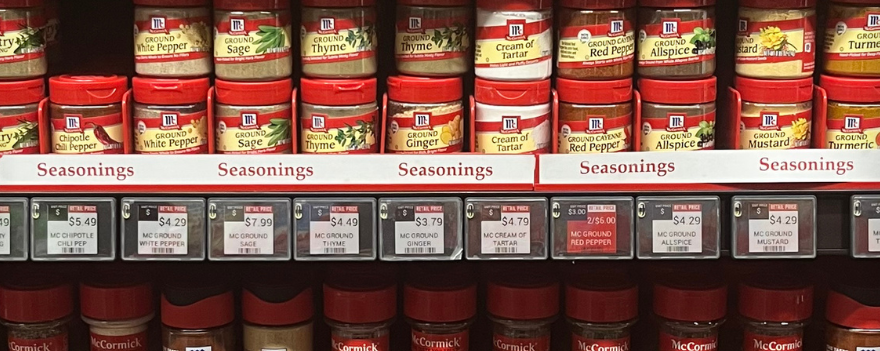
L'une des avancées technologiques les plus marquantes de 2025 a été l'adoption des étiquettes électroniques (ESL). Si les ESL ont commencé à gagner du terrain aux États-Unis dès 2023, c'est en 2025 qu'elles se sont véritablement généralisées. Les commerçants sont désormais accueillir les élèves d'origine étrangère au-delà de la simple tarification dynamique. Elles permettent de réaliser des économies de main-d’œuvre, de réduire les erreurs de tarification et de réagir plus rapidement aux fluctuations du marché en période d’inflation et de perturbations de la chaîne d’approvisionnement. Le retour sur investissement avéré de cette technologie en a fait un investissement prioritaire dans tous les types de commerces.
“ En 2025, les étiquettes électroniques de gondole sont passées de projets pilotes à des discussions à l'échelle de l'entreprise ”, a déclaré Farrell McKenna, président des États-Unis. “ Les distributeurs alimentaires américains les considèrent désormais comme un outil stratégique pour préserver leurs marges et rester réactifs face à l'évolution de la situation. ”
Malgré les inquiétudes exprimées en début d'année concernant les étiquettes de prix numériques et la perception des consommateurs, leur adoption a continué de progresser, les grands distributeurs ayant intensifié leur déploiement.
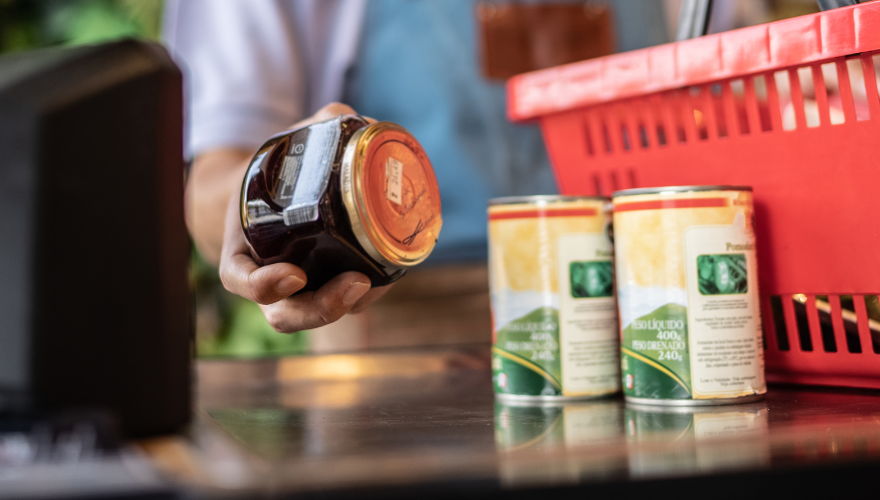
En 2025, les caisses en libre-service sont restées un élément clé de l'espace de vente des supermarchés. Cependant, le débat n'a plus porté sur l'opportunité de les mettre en place, mais sur la manière de les optimiser. Ces caisses font désormais partie intégrante de l'expérience d'achat en supermarché, avec modèles de caisse hybrides alliant des caisses avec personnel, des bornes de caisse en libre-service et des technologies d'assistance conçues pour réduire au minimum les erreurs et les vols.
Selon les données du secteur, le marché américain des caisses en libre-service dans le secteur de la grande distribution était évalué à environ 1 TP 4 T 1,5 milliard en 2025, sous l'effet de la pénurie de main-d'œuvre et de la demande en automatisation. De plus, on prévoit que cette forte croissance se poursuivra tout au long de la prochaine décennie.
Cependant, l'année 2025 a également mis en évidence certaines tensions autour de cette technologie. Plusieurs enseignes de grande distribution ont testé des solutions visant à améliorer, voire à supprimer, les caisses en libre-service dans certains magasins, afin d'améliorer l'expérience client et l'efficacité opérationnelle.
La baisse du chiffre d'affaires due au vol et à la fraude s'est poursuivie en 2025, ce qui a incité les commerçants à investir dans les technologies de sécurité. Qu'il s'agisse de systèmes avancés de reconnaissance des produits aux caisses en libre-service ou de protections physiques et informatiques renforcées, les distributeurs alimentaires ont élargi leur recours aux outils de prévention des pertes, renforcé la sécurité de leurs points de vente et investi massivement dans des technologies de surveillance et de lutte contre le skimming afin de protéger les données de leurs clients.
Les difficultés liées à la chaîne d'approvisionnement ont continué d'influencer les activités des magasins d'alimentation en 2025. Bien que la situation ait été moins instable que les années précédentes, les distributeurs alimentaires ont redoublé d'efforts pour renforcer l'agilité. L'approvisionnement local, les prévisions agiles et les modèles de distribution régionaux ont permis aux détaillants de se prémunir contre les perturbations, une tendance jugée essentielle dans la stratégie de distribution alimentaire pour 2025.
L'IA et l'analyse avancée ont également contribué à optimiser les stocks et la logistique. À la mi-année, de nombreux détaillants utilisaient déjà des outils d'IA pour améliorer la précision de leurs prévisions et réduire les ruptures de stock, ce qui a eu un impact direct sur la stabilité de la chaîne d'approvisionnement.
Après des années de perturbations liées aux droits de douane et aux goulets d'étranglement logistiques, les distributeurs alimentaires se sont tournés vers des stratégies d'approvisionnement locales et flexibles, ce qui leur a permis de réduire les délais de livraison et d'améliorer la disponibilité des produits en rayon. Ces efforts ont contribué à fluidifier les opérations et à réduire le risque de rayons vides et de chaos au niveau des prix.
L'adoption de l'IA dans l'épicerie n'était pas seulement un mot à la mode. En 2025, 45% de magasins d'alimentation utilisaient des systèmes de gestion des stocks et de paiement basés sur l'IA. Une majorité de chaînes prévoyaient d'investir dans l'IA pour optimiser leur chaîne d'approvisionnement et proposer des expériences personnalisées.
De la reconnaissance des produits assistée par l'IA aux chariots intelligents, en passant par la tarification dynamique et la surveillance des stocks en temps réel, la technologie a transformé les principaux domaines opérationnels tout au long de l'année 2025.
Un autre thème de 2025 a été l'essor du retail media : un écosystème combinant points de vente, étiquettes électroniques, affichage dynamique, e-commerce et programmes de fidélité. Les épiciers ont exploré de nouvelles façons de stimuler l'engagement des acheteurs et de générer des revenus supplémentaires. Intégrant des points de contact numériques dans tout le magasin physique.
S'appuyant sur leur succès en 2025, les étiquettes électroniques continueront de proliférer en 2026, s'étendant au-delà de la tarification pour jouer un rôle plus important dans les promotions, l'engagement des acheteurs et les activations de retail media.
Avec la généralisation des étiquettes électroniques, l'affichage dynamique intégré au linéaire prendra de l'importance. Les marques investiront probablement davantage de budgets publicitaires dans ces écrans, et les épiciers exploreront de nouveaux modèles pour monétiser les médias en linéaire et compenser les investissements technologiques.
Bien que l'adoption ait été prudente en raison des préoccupations liées à la démarque inconnue, les solutions de numérisation et départ (scan-and-go) se préparent à des phases pilotes et des déploiements significatifs en 2026. La réduction des temps d'attente et l'amélioration de la satisfaction client pourraient favoriser une acceptation plus large si les défis de sécurité sont relevés.
“L'IA n'est pas qu'un simple mot à la mode : elle devient un outil pratique pour les épiciers afin d'optimiser les prix, d'améliorer la gestion des stocks et d'offrir des expériences personnalisées.” Ed Sepelak, vice-président des ventes aux États-Unis, explique : “ En 2026, les détaillants qui utiliseront l'IA de manière réfléchie se démarqueront. ”
L'IA restera centrale pour l'innovation, notamment en matière d'optimisation des prix, de gestion de la chaîne d'approvisionnement et d'offres personnalisées. À mesure que les épiciers affineront leurs cas d'usage, le véritable impact commercial de l'IA deviendra plus clair, et probablement plus mesurable, en 2026.
Attendez-vous à une augmentation des outils d'orientation numérique en magasin, de l'aide à la recette par code QR aux parcours d'achat personnalisés et aux avatars numériques pour les épiciers indépendants. Ces outils permettront de différencier les expériences en magasin et de renforcer la fidélité.
Les épiciers doivent rester vigilants face aux exigences de conformité à venir, en particulier en ce qui concerne la traçabilité des aliments de la FSMA. Le calendrier de la FSMA a connu des décalages, mais la loi pourrait être appliquée au cours des prochaines années. Les détaillants doivent également surveiller les réglementations environnementales ciblant les émissions de carbone dans la réfrigération, en particulier dans des régions comme la métropole de New York, car celles-ci pourraient avoir d'importantes répercussions financières.
L'année 2025 a été une année de transformation pour le secteur de l'épicerie aux États-Unis. De l'adoption des étiquettes électroniques et de l'innovation dans les caisses en libre-service à l'amélioration de la résilience de la chaîne d'approvisionnement et à l'intégration de l'intelligence artificielle. Alors que nous tournons la page vers 2026, les épiciers sont idéalement positionnés pour capitaliser sur cette dynamique, débloquant une efficacité opérationnelle et un engagement des acheteurs plus profond que jamais.
Avec la technologie est désormais tissée dans le tissu des opérations d'épicerie, le voyage à venir promet encore plus de changements et d'opportunités.