
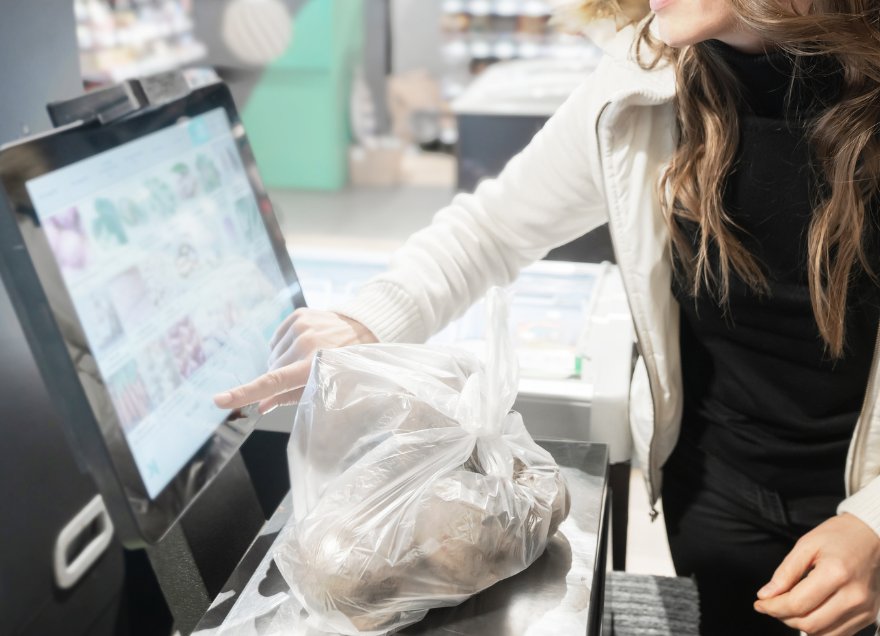
What was once a novelty or “option” has, in many grocery chains, become the default. According to a study, self-checkout (SCO) accounted for 55% of all grocery transactions. This was the first time SCO overtook traditional cashier lanes in overall share.
That dramatic shift signals something more than a trend: for many grocers, SCO is no longer optional; it’s foundational. Additionally, for store owners dealing with labor shortages, rising wages, and staffing instability, that foundation can relieve a lot of pressure.
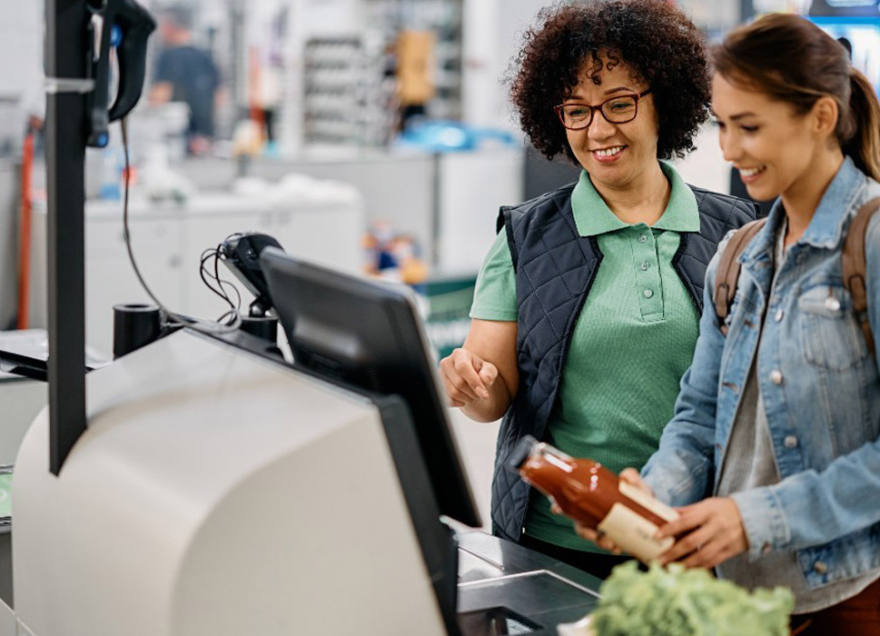
When scanning and bagging are moved to the customer, the store no longer needs a dedicated cashier for every lane. Instead, one trained attendant can monitor multiple self-checkout terminals, handling exceptions, age-restricted items, customer questions, or problem transactions. This consolidation reduces full-time front-end staffing demand, which can dramatically ease the burden when labor is scarce or turnover is high.
Meanwhile, with a growing portion of shoppers choosing SCO, the overall workload, especially during peak hours, becomes more manageable. Rather than pulling people off other departments to staff checkouts, you can direct labor where it’s most valuable: restocking, customer service, online order fulfillment, department support, etc.
Speed and convenience are among the top reasons customers prefer SCO. For customers with small baskets or just a few items, SCO offers a much quicker path through checkout, often avoiding lines altogether. That helps smooth traffic flow during rush hours, reduces bottlenecks, and keeps the front‑end from stagnating.
At the same time, faster checkout and improved flow mean less pressure on staff to scramble during peaks. Instead of needing extra cashiers, the store can rely on the existing attendants, increasing efficiency without compromising service.
With fewer people tied up at checkout, stores gain flexibility. Freed-up employees can be redeployed to departments that directly impact customer experience: produce, deli, stockroom, online order fulfillment, merchandising, floor support, and more. That helps the store remain well-staffed in critical areas, improving overall operations while keeping front-end labor lean.
This reallocation of labor often leads to a better overall store performance: more shelf replenishment, cleaner aisles, better customer service, and improved ability to respond to dynamic in-store needs.
SCO doesn’t have to, and shouldn’t, completely replace traditional checkout lanes. Many grocers are adopting a hybrid model, offering both SCO and staffed lanes. That allows customers to choose based on their needs: quick, light-basket trips via SCO or full carts, special orders, or assisted checkout via staffed lanes.
A hybrid model helps grocers balance efficiency and service: you optimize labor while still preserving high-touch customer support for those who prefer it.
Given current retail pressures like rising labor costs, tight labor markets, and unpredictable traffic patterns, self-checkout offers a powerful tool to stabilize front-end labor demand without compromising shopper experience.
Here are some of the upside levers that make SCO especially relevant now:
In other words, SCO isn’t about cutting labor; it’s about redeploying and optimizing it.
SCO brings clear operational advantages, but it also introduces risks that grocers must manage carefully. The main challenge: shrink (theft, mis-scans, partial scans) tends to be significantly higher at self-checkout than at traditional cashier lanes.
A study from 2023 found self‑checkout systems had a shrink rate more than 16 times greater than cashier lanes. That kind of loss can quickly erode the labor. However, since this article came out, many AI models have been put in place to reduce this statistic.
If you’re a grocery owner or manager considering or running SCO, here’s how to maximize its benefits and mitigate the risks:
Self‑checkout (SCO) offers grocery retailers an opportunity to relieve front-end labor pressure while preserving, and often elevating, service quality. When adopted thoughtfully, it reduces staffing needs, speeds up throughput, supports flexible labor deployment, and meets modern shopper expectations for speed and convenience.
But SCO must be managed with care. Without attentive staffing, loss prevention, and hybrid checkout options, the risks, especially around shrink, can outweigh the benefits.
For grocers navigating rising labor costs, staffing shortages, and changing shopper behavior, SCO should be viewed as a strategic lever, not a magic wand. With good execution, it can help you balance operational efficiency and customer satisfaction.