Connected technology allows grocery retailers to bring different systems and solutions together, creating a more efficient and informed retail environment. By integrating software, hardware, and data, retailers can streamline operations, simplify processes, make smarter business decisions, and improve the overall shopping experience. As customer expectations and operational demands continue to evolve, having a connected technology ecosystem helps retailers remain competitive and prepared for future growth.
The grocery industry is constantly evolving, and staying ahead of the curve means understanding not only where retail technology stands today, but also where it is heading next. From October 27–29, 2026, Ravyx had the opportunity to attend Grocery Innovations Canada (GIC), having important industry discussions, exchanging ideas, and exploring the technologies helping shape the future of grocery retail.
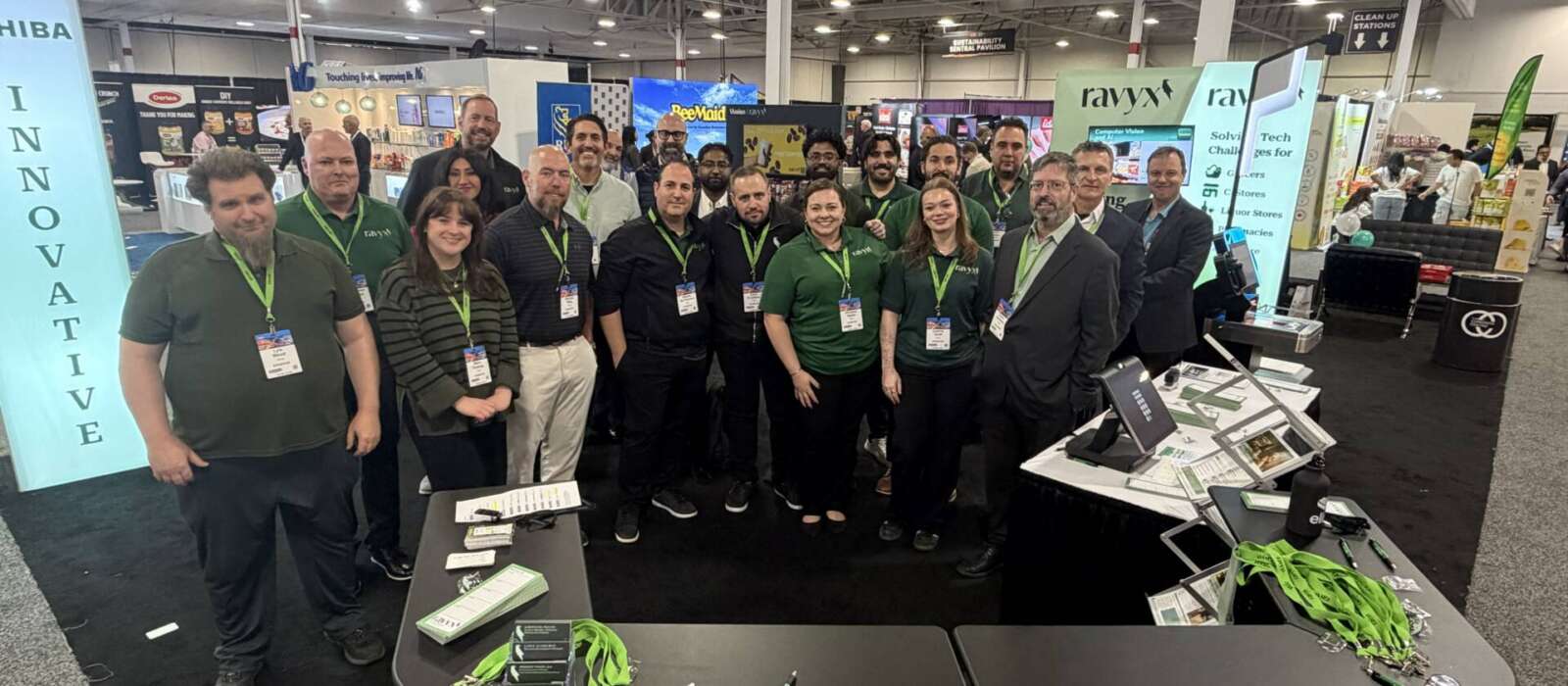
This year’s conference reinforced something we continue to see across the industry, that technology is no longer about implementing individual solutions. With a larger booth, valuable conversations, and the opportunity to share the floor with our partners at LOC Software, Vusion, and Toshiba, GIC 2026 gave us plenty to reflect on.
One of the biggest themes we retained from GIC 2026 was the growing importance of connected technology. As grocery operations become increasingly complex, retailers need solutions that work together rather than operate independently.
This was the focus of our panel discussion, From Data to Decisions, with Shawn Cunningham accompanied by our partners, Dina Federici from Toshiba, François Labelle from LOC Software, and Michael Wray from Vusion. The conversation explored how connected technology ecosystems are creating new opportunities for grocery retailers to improve profitability, streamline operations, and better serve today’s evolving shoppers.
A key takeaway was the importance of turning information into actionable decisions. Retailers generate significant amounts of data throughout their operations, from inventory and pricing to transactions and customer behaviour. However, having access to data is only part of the equation. The real value comes from being able to connect that information across systems and use it to make informed business decisions.
When software and hardware work together, retailers can gain better visibility into their operations, identify opportunities for improvement, and make adjustments more efficiently. Whether it’s using point-of-sale data to support inventory decisions, electronic shelf labels to simplify price management, or self-checkout technology to improve transaction flexibility, each solution contributes to a more connected retail environment.
Another important takeaway from this year’s conference was the ongoing transformation of the grocery shopping experience. During the session, The New Food Retail Playbook, industry discussions explored the latest grocery trends and retailer examples, with practical implications for store experience, format, convenience, assortment, and differentiation.
Today’s shoppers have evolving expectations. Convenience, accessibility, and an enjoyable in-store experience all influence where and how people shop. Retailers are therefore being challenged to rethink how their stores operate and what makes them stand out from the competition. This means looking beyond product selection and pricing. Store layouts, checkout options, product availability, and the overall shopping journey all contribute to the customer experience.
One thing that stood out to us at GIC was the importance of having the right technology partners. Every grocery retailer operates differently. Store sizes, business models, customer demographics, operational challenges, and long-term goals all influence which solutions make the most sense. There is no universal approach to retail technology, which makes understanding each retailer’s needs an essential first step.
This is also why having our partners alongside us at GIC was so valuable. Together with LOC Software, Vusion, and Toshiba, we were able to showcase how different technologies complement one another to create a more complete retail solution. From software that supports store management and operations to hardware such as electronic shelf labels and self-checkout machines, our booth allowed us to demonstrate the full scope of what’s possible when you have the right solutions.
It also created more opportunities to have meaningful conversations with retailers about their current challenges, what they want to improve, and how technology can help them get there. At Ravyx, we understand that implementing new technology is about more than selecting a product. It’s about finding solutions that fit into existing workflows, support business objectives, and can grow alongside the retailer. Having trusted partners and the right expertise makes that process much easier.
GIC 2026 also reminded us of the importance of looking at retail technology as a long-term investment rather than a short-term fix. With increasing operational demands and changing customer expectations, grocery retailers need systems that can adapt. Solutions should not only address today’s challenges but also provide the flexibility to support future growth.
This is where integration becomes particularly important. When systems communicate effectively, retailers can reduce disconnected processes, limit manual work, and create more consistent workflows across their stores. Instead of asking which individual product to implement next, retailers should consider how their entire technology environment can work together to support their business.
Our experience at GIC Canada 2026 left us with a renewed appreciation for the innovation, collaboration, and forward-thinking conversations happening across the grocery industry.
From our panel discussion on connected technology ecosystems to conversations surrounding the evolving grocery shopping experience, one message remained consistent: the future of grocery retail depends on making smarter use of technology. Retailers need more than standalone solutions. They need connected systems, reliable partners, and technology that supports their operations while keeping the customer experience at the centre.
We are grateful to have shared this year’s conference with our partners at LOC Software, Vusion, and Toshiba, and to everyone who took the time to visit our booth, exchange ideas, and discuss the future of grocery retail with us. As we look beyond GIC 2026, we are excited to continue helping retailers identify the right technologies, strengthen their operations, and build more connected, efficient, and adaptable stores.