
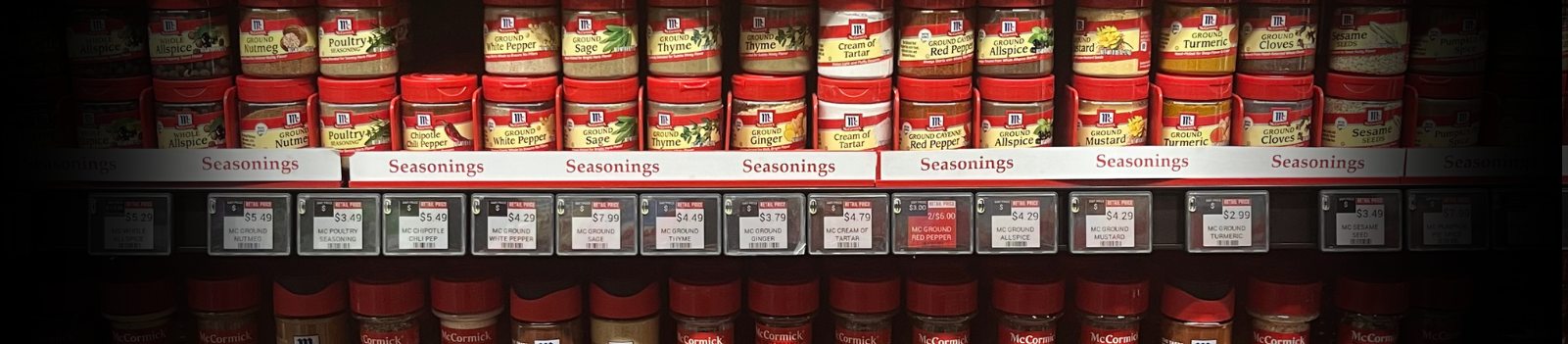
More grocery retailers are investing in electronic shelf labels because they simplify price management, improve pricing accuracy, reduce manual labor, and support omnichannel retail. By replacing paper shelf tags with a centralized digital solution, grocers can respond more quickly to changes, create a more consistent shopping experience, and build a stronger foundation for future growth.
Paper shelf labels have been the industry standard for decades, but they create hidden costs that many retailers simply accept as part of doing business. Every price change requires employees to print new tags, find the products, replace the labels, and verify pricing throughout the store.
For stores managing thousands of SKUs and weekly or even daily promotional changes, these repetitive tasks consume valuable labor hours that could be spent helping customers, stocking shelves, or improving store operations.
Electronic shelf labels automate this process by allowing retailers to update pricing instantly from a centralized platform. Whether prices change across one department or every aisle, updates can happen simultaneously without requiring employees to walk the store replacing labels. As explained by Vusion‘s overview of digital shelf labels, ESL technology helps retailers improve operational efficiency while reducing pricing errors and manual work.
Nothing frustrates shoppers more than finding one price on the shelf and another at checkout. Pricing discrepancies create a lack of trust that can negatively impact customer confidence. With electronic shelf labels, pricing stays synchronized between the shelf and the retailer’s back-office system, helping ensure customers see accurate information when making purchasing decisions.
Accurate pricing also benefits your employees, instead of responding to pricing disputes or fixing outdated shelf tags, employees can focus on delivering better customer service. As more retailers compete on convenience and experience not just maintaining consistent pricing throughout the store, it becomes increasingly important.
Modern grocery pricing changes constantly. Competitive pricing strategies, vendor promotions, seasonal offers, and inventory fluctuations all require stores to adjust prices quickly. Using traditional paper labels often means delaying price updates until employees have time to replace every tag.
Electronic shelf labels allow grocers to react almost instantly. Promotions can begin exactly when scheduled, markdowns can happen in real time, and pricing can remain consistent across every department.
Según Progressive Grocer, the next-generation shelf technology is helping retailers improve operational agility while creating a more connected shopping experience. Grocery Dive on the other hand highlights how more grocers are adopting ESL technology to simplify operations and better manage pricing at scale.
While labor savings often justify the initial investment, the value of ESL extends far beyond operational efficiency. Electronic shelf labels become part of a connected retail ecosystem that supports future innovations such as:
Rather than solving one operational challenge, electronic shelf labels create a digital infrastructure that allows retailers to adopt new technologies more easily as customer expectations continue to evolve. For grocers focused on long-term growth, investing in ESL technology is also an investment in operational flexibility.
Today’s shoppers will often browse products online, compare prices on their phones, order groceries for pickup, and expect the same promotions and pricing wherever they shop. For grocers, maintaining that consistency can be a challenge without the right technology in place.
Electronic shelf labels help bridge the gap between physical stores and digital channels by keeping pricing accurate and up to date across the retail environment. When integrated with a retailer’s pricing and inventory systems, ESL technology enables stores to quickly reflect promotional changes, maintain consistent shelf pricing, and support a more unified shopping experience.
This level of synchronization is especially valuable for grocers offering services like curbside pickup, or loyalty-based promotions. Instead of relying on manual updates that can lead to discrepancies, electronic shelf labels help ensure shoppers see accurate pricing whether they’re browsing online or the aisles.
As omnichannel retail continues to grow, electronic shelf labels provide the flexibility grocers need to deliver a connected customer experience while simplifying operations behind the scenes. Rather than operating as a standalone pricing tool, ESLs become an important part of the technology ecosystem that supports modern grocery retail.
Retailers today face increasing pressure to operate with agile teams while delivering better customer experiences. Every hour spent replacing paper shelf tags is time that could be dedicated to serving shoppers or improving store performance.
That’s why more grocery retailers, both chains and independent stores are recognizing the value of electronic shelf labels. Beyond reducing manual work, ESL technology improves pricing accuracy, strengthens customer confidence, and helps stores respond faster in an increasingly competitive market.
As grocery retail continues to evolve, electronic shelf labels are becoming one of the foundational technologies that support smarter operations. Stores that invest in ESL today aren’t simply replacing paper labels, they’re creating a more agile, efficient, and future-ready retail environment.